Where Democracy Goes for Coffee: The Rise of the Neighborhood Café as America's New Public Square

Photo by Photo by Spencer Davis on Unsplash on Unsplash
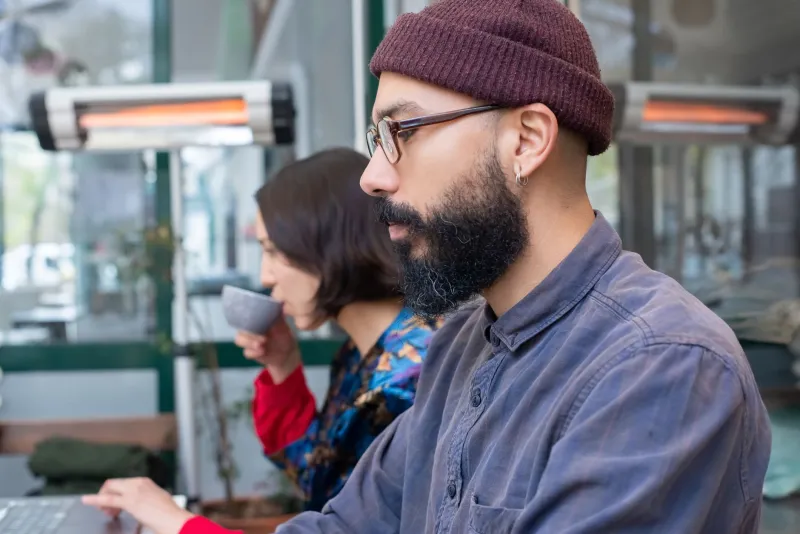
There's a corner table at a small café in Asheville, North Carolina, where a tenant rights group has been meeting every other Tuesday for going on three years. No conference room. No nonprofit letterhead on the wall. Just mismatched chairs, a standing order of drip coffee and one shared almond croissant, and a rotating cast of neighbors who showed up because the flyer on the bulletin board said everyone welcome.
That table has produced two successful city council petitions, one mural project, and at least a dozen friendships that didn't exist before. The café didn't plan any of that. It just left the door open.
This is happening all over the country, quietly and without much fanfare. Independent coffee shops — the ones with the hand-lettered menus and the slightly wobbly bar stools — are becoming something bigger than a place to get a good latte. They're becoming the connective tissue of American civic life at a moment when that tissue is badly frayed.
The Concept That Explains Everything
Sociologist Ray Oldenburg laid out the theory decades ago. He called it the "third place" — not home, not work, but the informal gathering ground where a community actually gets to know itself. The barbershop. The diner. The front porch that somehow belongs to everyone on the block.
Oldenburg worried those spaces were disappearing. Suburban sprawl, car culture, and the slow death of walkable neighborhoods had hollowed out the places where Americans used to just be together without an agenda. His concern aged into a kind of prophecy. Social isolation has been climbing steadily, and the pandemic didn't help. Studies keep finding that Americans have fewer close friends than they did a generation ago, less trust in their neighbors, and less sense of shared community identity.
Into that gap, the independent café has quietly stepped.
It's not that coffee shops invented the third place. It's that they've become one of the last ones still standing — and some of them are starting to take that role seriously.
More Than an Open-Door Policy
The distinction between an independent café and a corporate chain isn't just about sourcing or aesthetics. It runs deeper than oat milk and exposed brick. It's about what the space is for.
A chain location is optimized. Every square foot is calculated for throughput, brand consistency, and a customer experience that feels identical whether you're in Portland, Oregon or Portland, Maine. That's not a criticism — it's a design philosophy. But it doesn't leave much room for a city council candidate to host an informal meet-and-greet, or for a local poet to tape up a sign-up sheet for a reading series.
Independent cafés operate on a different logic. The owner knows the regulars by name. The bulletin board is a genuine bulletin board, not a corporate-approved display case. When a neighborhood group asks to use the back corner on a slow Wednesday night, the answer is often just — sure, of course.
In Denver, a café owner started hosting monthly "civic conversations" after noticing that her regulars kept arguing about local politics in hushed tones, like they were doing something slightly embarrassing. She put out folding chairs, made a big pot of coffee, and let people talk. The first meeting drew eleven people. The third drew over forty.
"People are starving for a place where they can disagree without it being a disaster," she told a local paper. "Here, we all still have to look each other in the face tomorrow morning."
The Art on the Walls Isn't Decoration
Walk into almost any independent café and you'll see it: local artwork, hand-stamped zines, flyers for open mics and film screenings and skill-shares. This stuff is easy to dismiss as atmosphere. It's actually infrastructure.
When a café hosts a rotating gallery of work by neighborhood artists, it's doing something a museum can't — it's making art a normal part of a Tuesday. When it stocks a little free library in the corner or pins up a community resource board, it's saying something about what kind of space this is and who it's for.
In a mid-sized city in Ohio, one café became the unlikely home base for a creative collective that started with three illustrators who kept running into each other at the same corner table. They eventually formalized into a group of fourteen, hosting monthly critique sessions and an annual zine fair that now draws visitors from three states. The café didn't create the collective. It just provided the conditions — reliable wifi, cheap coffee, and a staff that never asked them to hurry up and leave.
That last part matters more than it sounds. The implicit message of a space that lets you linger is one of welcome. And welcome, it turns out, is the precondition for almost everything else.
When the Coffee Shop Becomes a Campaign Headquarters
Grassroots political organizing has always needed somewhere to happen. Historically, that meant church basements and union halls. Both of those have seen their own declines. The independent café has absorbed some of that function without quite meaning to.
In smaller cities and towns especially, local campaigns — for school board seats, city council positions, ballot initiatives — increasingly operate out of neighborhood coffee shops. Candidates host casual meet-and-greets. Volunteers fold mailers over cold brew. Neighbors who wouldn't attend a formal campaign event will wander in for a coffee and end up staying for a conversation.
What makes this work is the informality. There's no podium, no press release. Just people in a room that already feels comfortable, talking about something that matters to them. The café's existing social gravity — the fact that people already come here, already feel at ease here — does half the work.
This isn't about any particular political stripe. Cafés that play this role tend to be genuinely open. The same back room that hosts a progressive housing coalition on Tuesday might host a neighborhood watch meeting on Thursday. What they share is the commitment to the neighborhood itself, which turns out to be something most people can agree on even when they agree on very little else.
What Makes a Space Feel Safe Enough to Show Up
Not every café becomes a community anchor, and it's worth asking what separates the ones that do. The physical setup helps — enough space, enough seating, enough acoustic tolerance for a group conversation. But the more important factors are harder to design.
Owners and staff set the tone. A café where the barista knows your name and the owner waves from behind the espresso machine is a café where strangers feel slightly less like strangers. That warmth is contagious. It lowers the invisible social threshold that keeps people isolated even in crowded rooms.
Consistency matters too. Third places work because they're reliably there. The Tuesday night group keeps coming back because the café keeps being open, keeps being welcoming, keeps being the same place it was last week. That kind of dependability is its own form of community investment.
And then there's something harder to name — a quality of intentionality, maybe, or just genuine care about the neighborhood. The cafés that become real community hubs tend to be run by people who live in the neighborhood, who send their kids to the local schools, who have a stake in what this block becomes. That shows up in a thousand small decisions, and people can feel it.
The Cup That Holds It All Together
America has always been better at building community than it gives itself credit for, and worse at protecting the spaces where that happens. We've let a lot of third places slip away — the diners, the corner bars, the public parks that got too expensive to maintain. The independent café isn't a perfect replacement for all of them. But it's something.
Every time a neighborhood coffee shop props open its door for a community forum, hangs a local artist's work on its walls, or simply stays open long enough for a conversation to turn into something real — it's doing a kind of civic work that doesn't show up in any budget or strategic plan. It's just a cup of coffee and a table and a little bit of time.
That's not nothing. Right now, it might be everything.