Last Call: The Hidden Forces Quietly Shutting Down America's Independent Coffee Shops
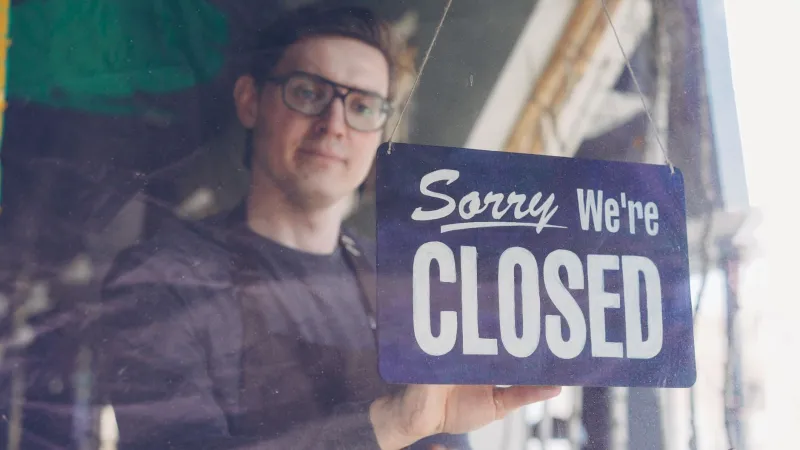
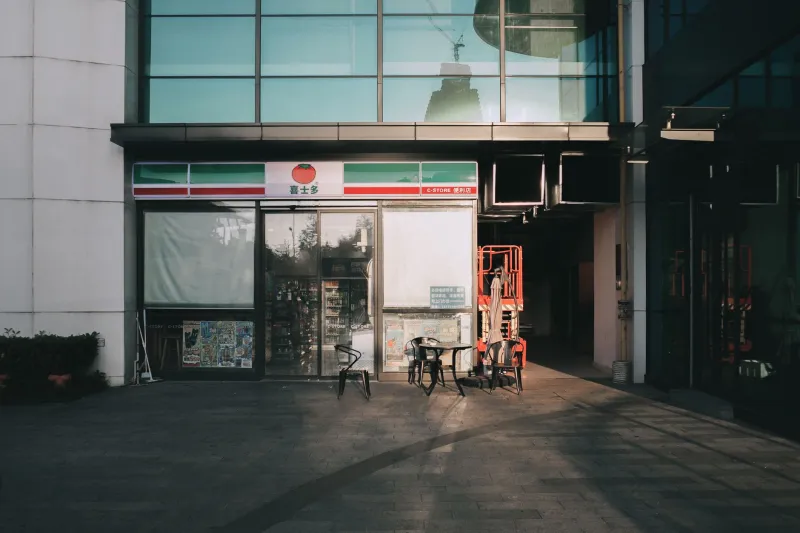
There's a particular kind of grief that hits when you walk past a storefront and see brown paper taped over the windows where a café used to be. You remember the specific creak of that door. The way the light came in at noon. The barista who never had to ask for your name because she already knew it. And then it's just — gone.
This isn't a rare experience anymore. Across the country, independent coffee shops are closing faster than new ones can open, and the reasons stack up in ways that would make any small business owner lose sleep. If you've noticed more empty storefronts where your favorite spots used to be, you're not imagining it.
The Numbers Behind the Empty Chairs
The independent café has always operated on razor-thin margins. Most industry estimates put net profit somewhere between 2.5% and 6.5% for a well-run shop — and that's on a good year, with a loyal customer base and no major surprises. The math was already hard before the world got complicated.
Then came the compounding blows: inflation driving up the cost of milk, beans, and paper cups; commercial rents in urban neighborhoods spiking as landlords recovered pandemic losses; minimum wage increases that, while absolutely necessary for workers, hit small operators without the scale to absorb them the way a chain with 400 locations can. None of these things alone would necessarily sink a shop. Together, they've become a tide that a lot of owners simply can't swim against.
According to the Specialty Coffee Association, thousands of independent cafés shuttered in the years following 2020, and the recovery has been uneven at best. Cities that saw remote workers flood in temporarily are now watching those same workers settle into hybrid routines that don't always include a daily café stop.
What Chains Can Do That Independents Can't
Let's be honest about something: Starbucks isn't the villain here, exactly. But corporate coffee does benefit from structural advantages that independent shops simply don't have access to. Bulk purchasing power keeps ingredient costs lower. National marketing budgets drive brand awareness without a single local owner lifting a finger. And perhaps most critically, corporate chains can absorb a slow quarter — or a slow year — in a way that a single-location café owner running on personal savings absolutely cannot.
The rise of app-based ordering and loyalty programs has also shifted consumer behavior in ways that favor big players. When someone's already got 400 Starbucks points on their phone and a free drink waiting, the friction to try the independent spot down the street gets higher, not lower. Habits, once formed, are stubborn things.
Delivery Apps and the Illusion of Reach
You'd think delivery apps would be a lifeline for small cafés — more customers, more orders, less reliance on foot traffic. The reality is messier. Commission rates from major platforms routinely run between 15% and 30% per order. For a café already operating on a 4% margin, handing over a quarter of each sale to an app doesn't expand the business. It hollows it out.
Some owners have tried it, watched the numbers, and quietly pulled out. Others feel trapped — not listing on the apps means losing visibility in an era when discovery often starts on a phone screen. It's a catch-22 that bigger operations can navigate more easily because they have the volume to make the math work, even with the fees.
The Remote Work Paradox
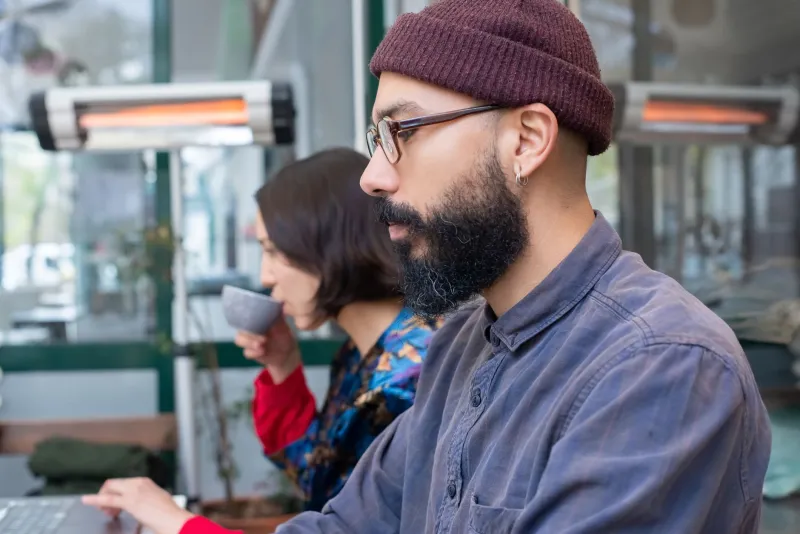
Here's the cruel irony: the remote work boom was supposed to be great for coffee shops. And for a while, it was. Cafés became offices, meeting rooms, and lifelines for people who needed human contact and a reason to get dressed. Regulars showed up not just for coffee but for the structure it gave their days.
But that wave also introduced new tensions. A single customer nursing a $4 drip coffee for four hours while occupying a table with four seats is a real economic problem for a small shop. Some cafés introduced time limits or minimum purchase requirements. Others didn't, either out of principle or fear of alienating customers — and quietly struggled as a result.
Now, with many companies pulling workers back to offices at least part of the week, the daytime foot traffic that kept some cafés afloat has thinned again. The remote work moment turned out to be a complicated gift.
What Gets Lost When the Café Closes
This is where the conversation shifts from economics to something harder to quantify. Sociologists have long used the term "third place" — coined by Ray Oldenburg — to describe spaces that are neither home nor work, where people gather without agenda and community forms organically. The neighborhood café is one of the last true third places most Americans have access to.
When a café closes, what disappears isn't just a place to get coffee. It's the spot where the retiree and the college student ended up talking for an hour. Where the newcomer to the neighborhood started recognizing faces. Where someone sat alone after a hard week and felt, without anyone saying a word, a little less alone.
Regulars who've lost beloved spots describe it in surprisingly similar terms: a sense of disorientation, like a piece of the neighborhood's identity has been quietly removed. Some find another café. Others don't, and the habit of showing up somewhere just to be present — in a community, in a body, in a day — quietly fades.
Is There a Way Through?
Some independent café owners are finding creative paths forward. Community ownership models, where regulars buy shares and essentially invest in the shop's survival, have gained traction in a handful of cities. Others have leaned into becoming genuine event spaces — hosting open mics, book clubs, local art shows — to build revenue streams beyond the cup.
There's also a quieter kind of resistance happening: customers who've become more intentional about where they spend their coffee money. People who choose the independent shop even when it's slightly less convenient, who tip generously, who bring a friend. It's not a solution to structural economic pressure, but it's not nothing either.
The café that knows your order, that holds space for your worst Tuesdays and your best Sunday mornings, doesn't sustain itself on sentiment alone. It needs the dollars. And right now, those dollars are being pulled in a lot of directions.
The Last Sip
Nobody opens an independent coffee shop expecting it to be easy. The people who do it anyway — who wake up before dawn to pull espresso shots for a community they genuinely love — deserve better than a business environment that stacks the deck against them at every turn.
The disappearance of independent cafés isn't just a story about coffee. It's a story about what kinds of spaces we're willing to fight for, and what we're quietly willing to let go. The brown paper on the windows goes up fast. Getting something like that back takes a lot longer.
Next time you're in your neighborhood café, stay a little longer. Order one more thing. Tell someone it matters. Because it does — more than most of us realize until it's already gone.