What Your Barista Remembers That the Internet Never Will

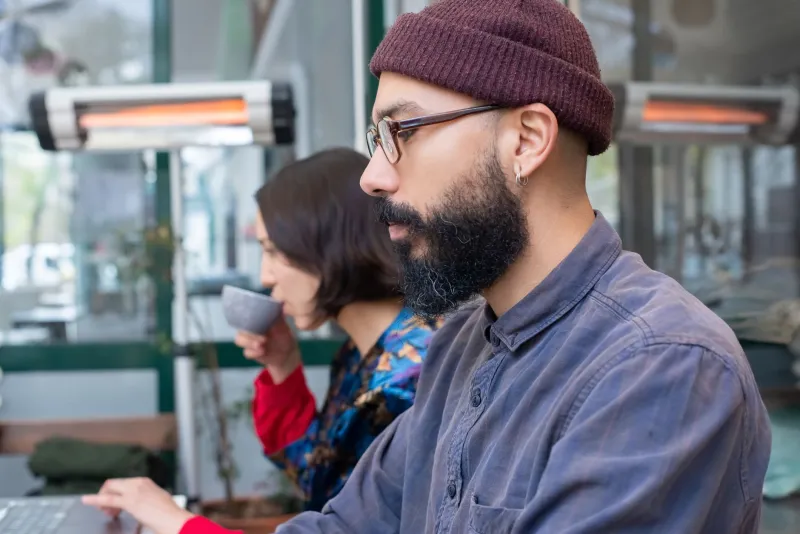
Photo by Photo by Benjamin Chambon on Unsplash on Unsplash
Somewhere between your second latte and a slow Tuesday morning, you mentioned offhand that you had a job interview that afternoon. You were nervous. You ordered something stronger than usual. The next time you walked in, before you even reached the counter, your barista looked up and said, "So? How'd it go?"
No notification. No algorithm. No reminder set. Just a person who was paying attention.
That moment — small, unremarkable on the surface — is actually something pretty rare. And it's getting rarer.
The Archive Nobody Talks About
We live in a time when memory feels like it should be automatic. Photos get backed up to the cloud. Conversations are logged. Timelines scroll back years with a flick of the thumb. And yet, for all that data storage, there's a specific kind of remembering that our devices simply cannot replicate: the kind that happens when another human being actually gives a damn.
Baristas and café owners have been doing this kind of remembering for as long as there have been coffee shops. They're not doing it because they were trained to. They're doing it because, when you spend enough hours behind a counter watching the same faces come through the door, you become something like a witness to those people's lives.
Think about what a regular barista actually accumulates over a few years. They know who drinks decaf but pretends not to. They know which couple used to come in together on Saturday mornings and then, quietly, stopped. They know which customer cried in the corner booth during a phone call last March and came back the next day looking like a different person. They know who started ordering hot drinks again when the relationship ended, because that's what she drank before him.
None of this is written down anywhere. It lives in a person.
Why Human Memory Hits Different
There's a reason it feels meaningful when someone at your coffee shop remembers something about you — something you maybe half-forgot you even said. Digital memory is passive. It stores what happened, but it doesn't care that it happened. Your phone's photo library has thousands of images from the last decade. It does not feel anything about a single one of them.
Human memory, especially the kind cultivated in a place you return to again and again, carries weight because it implies value. When your barista asks how your mom is doing after you mentioned her surgery two months ago, what you're really hearing is: I noticed. You mattered enough to remember.
Psychologists have a term for the kind of space where this happens — a "third place," somewhere that's neither home nor work but functions as a social anchor. Coffee shops have always been natural third places, and part of what makes them work is exactly this: the accumulation of small, human recognitions over time. You are not a transaction. You are a person with a history, and this place holds a piece of it.
The Milestones That Live Between the Sips
Ask any longtime café owner and they'll tell you the same thing: the counter has seen everything. First dates that turned into marriages. Job losses that turned into new careers. Grief that had nowhere else to go on a Wednesday morning. The nervous PhD student who came in every day for a year, ordered the same cortado, and one afternoon walked in beaming because she'd defended her dissertation.
These aren't stories the customers necessarily posted about. They're not on a highlight reel. They happened in real time, in a real place, witnessed by real people who happened to be making coffee.
In some ways, the café functions as an unofficial neighborhood archive — not of the big, documented events, but of the quieter, truer ones. The version of your life that didn't make it into the Instagram caption. The you that showed up before the coffee kicked in, before the performance started, before you figured out what you were going to say about any of it.
What Gets Lost When the Café Closes
Here's the part that doesn't get said enough: when a coffee shop shuts its doors, it's not just the lattes and the comfortable chairs that disappear. It's the memory bank.
The barista who knew your regular order and your backstory moves on. The owner who watched your kids grow from stroller age to backpack age packs up the espresso machine. And all of that accumulated, unwritten history — the informal record of a neighborhood's people and their lives — just evaporates.
No one catalogs it. No one exports it. It's gone in a way that a closed social media account is not, because at least that account still technically exists on a server somewhere. The memory that lived in a person, in a place, in the ritual of daily coffee — that's a different kind of loss entirely.
It's worth sitting with that for a second, especially as independent coffee shops continue to navigate the pressures of rising rents, staffing challenges, and competition from chains that are very good at consistency and very bad at actually knowing your name.
The Quiet Work of Paying Attention
If you've ever wondered what separates a great coffee shop from a merely good one, this is a big part of the answer. It's not just the beans or the pour or the playlist. It's whether the people behind the counter have made a practice of noticing.
That's not a small thing. In an industry with brutal hours and thin margins, choosing to invest emotional attention in the people you serve is a kind of generosity. It's what turns a coffee shop into a community. It's what makes a neighborhood feel like a neighborhood.
And it's what makes you — on a hard morning, when everything feels impersonal and loud and algorithmically sorted — feel like a human being who belongs somewhere.
Your barista doesn't need a database to remember that you take oat milk now, that you've been stressed about your lease, that you seemed lighter last week than you did the week before. They just need to be the kind of person who's paying attention. And the good ones always are.
That's the archive no cloud service has figured out how to build. Turns out, it runs on coffee and eye contact.