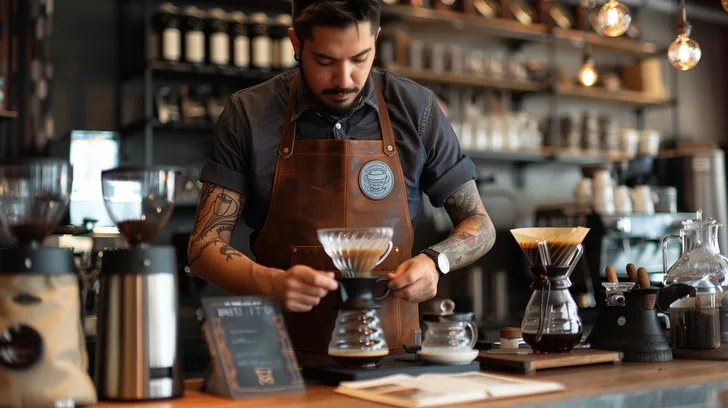
Roasted Right Here: Why Your Local Coffee Roaster Is the Best Cup You're Not Talking About Enough
Let's talk about the part of your morning coffee that most people never think about.
Not the brewing method. Not even the café. We're talking about the roaster — the person (or small team) who took a green, grassy, basically undrinkable raw coffee bean and transformed it, through heat and timing and a whole lot of hard-won knowledge, into something that smells incredible and tastes even better.
In cities and towns across the US, a quiet revolution has been brewing — pun absolutely intended. Independent roasters have been popping up from Asheville to Albuquerque, each with their own sourcing philosophy, their own roast profiles, and their own passionate opinions about what coffee should taste like. And the best local cafés have been paying attention.
Why Roasting Actually Matters
Here's the short version: coffee is a fruit. The beans are the seeds of a cherry, and like any agricultural product, the way it's processed makes an enormous difference in the final flavor.
Roasting is where a lot of that flavor gets unlocked — or lost. Roast too light and you might highlight the bean's natural acidity and fruit notes, but leave it underdeveloped. Roast too dark and you risk burning away the complexity that made that particular origin special in the first place. Getting it right is genuinely difficult, and it takes years of practice.
"People think roasting is just turning beans brown," says Elena, co-owner of a small roastery in Knoxville, Tennessee that supplies several cafés across the Southeast. "But you're essentially making hundreds of tiny decisions every single roast. Temperature curves, airflow, drop time — everything affects what ends up in the cup."
A Taste of America's Regional Roasting Scene
One of the more fascinating things about the US specialty coffee scene is how regional it's become. Different parts of the country have developed distinct roasting identities — shaped by local tastes, the café culture in each area, and the backgrounds of the roasters themselves.
The Pacific Northwest has long been the spiritual home of American specialty coffee. Roasters in Portland and Seattle tend to favor lighter roasts that preserve origin character — think bright, floral Ethiopian naturals or clean, juicy Guatemalan washed coffees. The emphasis is on letting the bean speak.
The South and Southeast have seen explosive growth in the roasting scene over the last decade. Cities like Nashville, Atlanta, and New Orleans are home to roasters who often blend approachability with craft — medium roasts that play well with milk but still have something interesting going on underneath.
The Midwest — Chicago in particular — punches well above its weight. A number of nationally respected roasters call the region home, and there's a strong emphasis on education and transparency: detailed tasting notes, farm-level sourcing information, and an audience that's genuinely curious about what they're drinking.
The Northeast brings its own energy. New York's roasting scene is diverse and competitive, with a mix of high-concept specialty roasters and community-focused shops that prioritize accessibility. Boston, too, has developed a serious craft coffee culture over the past several years.
The Mountain West and Southwest — Denver, Salt Lake City, Tucson — are home to some of the country's most adventurous roasters, experimenting with processing methods and sourcing relationships that push the boundaries of what coffee can taste like.
The Café-Roaster Relationship
For independent cafés, choosing a roasting partner is one of the most important decisions they make. It's not just about flavor — it's about values, consistency, and trust.
"When we found our roaster, it felt like finding the right collaborator," says Thomas, who co-owns a café in Denver's RiNo neighborhood. "We visited their facility, talked through our menu, tasted probably forty different coffees together. Now they're basically part of our team."
That kind of relationship is common in the specialty world. Many local roasters offer what's called a "direct trade" or "relationship-based" sourcing model — meaning they've built ongoing partnerships with specific farms, often visiting them in person, paying above-market prices, and sharing feedback on quality. When your café uses a roaster like that, you're part of a chain that stretches all the way back to a specific hillside in Colombia or Ethiopia.
It's a very different model from commodity coffee, and you can taste the difference.
What to Look for in Locally-Roasted Coffee
Not sure where to start? Here's a practical checklist for finding quality locally-roasted coffee in your area:
Check the bag for a roast date. Freshness matters enormously with coffee. Look for beans roasted within the last two to four weeks. If there's no date on the bag, that's a red flag.
Look for origin transparency. Quality roasters are proud of where their coffee comes from. Bags should list the country, region, and ideally the farm or cooperative. Vague labels like "premium blend" tell you very little.
Ask your café. If you're already a regular somewhere, just ask who roasts their coffee and whether you can buy beans to take home. Most cafés are happy to talk about it — it's something they're genuinely proud of.
Explore your city's roastery map. Many cities now have multiple roasters offering public tastings, tours, or subscription services. A quick search for "specialty coffee roaster" plus your city name is usually enough to get started.
Try something unfamiliar. If you always reach for a dark roast, try a medium. If you're a light-roast person, ask the barista what the most approachable option is right now. Local roasters rotate their offerings seasonally, and there's always something worth discovering.
Why Supporting Local Roasters Matters
Beyond the quality in your cup, there's a bigger picture worth considering.
When you buy coffee from a local roaster — or patronize a café that sources locally — you're supporting a small business that's invested in your community. You're also supporting a supply chain that tends to be more ethical, more transparent, and more directly beneficial to the farmers who grew the coffee in the first place.
Local roasters are also, almost by definition, more responsive. They're not managing a global supply chain from a corporate headquarters. They're in your city, roasting small batches, adjusting to seasonal harvests, and genuinely caring about what ends up in your mug.
"We know our customers by name," Elena says. "And we know our farmers by name too. That accountability changes everything about how we work."
Start with Your Next Cup
You don't have to become a coffee obsessive to appreciate what local roasters bring to the table. You just have to be a little curious.
Next time you're at your favorite café, take a look at the coffee bag on the shelf. Read the label. Ask the barista what they're excited about right now. Take a bag home and brew it slow on a Saturday morning.
Chances are, you'll taste something that makes you want to know more. And that curiosity — that desire to understand what's in your cup and where it came from — is exactly what keeps the local coffee scene alive.