They Know Your Order Before You Ask: The Quiet Magic of Baristas Who Actually See You
Photo: friendly barista smiling talking to customer at coffee shop counter, via www.hairthestyle.com
You walk through the door, still half-asleep, and before you've even reached the counter, you hear it: "The usual?" Two words. Somehow, they're enough to make the whole morning feel a little less brutal.
It's a small thing, right? Except it isn't. Not really.
In a culture that's increasingly mediated by apps, algorithms, and self-checkout kiosks, the coffee shop has quietly become one of the last places where a stranger greets you by name — and actually means it. And the person making that happen? Your barista.
More Than a Coffee Order
Ask anyone who's been a regular at a café for more than a few months, and they'll probably tell you a version of the same story. There's a barista who noticed when they seemed off. One who remembered their kid's soccer tournament. One who set aside the last almond croissant because they knew it was their Friday treat.
These moments don't happen by accident. They're the product of a particular kind of attention — the kind that's actually pretty rare in modern life.
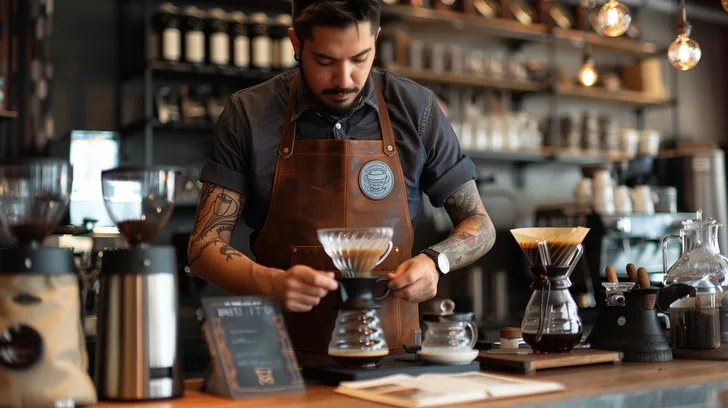
"I think people underestimate how much we pay attention," says Marcus, a barista who's been working at an independent café in Portland, Oregon for going on six years. "After a while, you don't even think about it consciously. You just know that Tuesday is when she comes in after her therapy appointment, or that he always needs an extra shot when he's got a big deadline."
That kind of knowing is, in a very real sense, a form of care.
The Psychology of Being Remembered
There's actual science behind why this matters so much. Psychologists have long studied the human need for belonging — the deep-seated desire to be recognized as an individual rather than just another face in a crowd. Abraham Maslow famously placed it right in the middle of his hierarchy of needs, sandwiched between safety and self-esteem.
What's interesting is that belonging doesn't require deep, intimate relationships to kick in. Research suggests that even brief, repeated positive interactions with familiar people — what social scientists call "weak ties" — contribute meaningfully to a person's sense of well-being and community.
In plain English: the barista who waves when you walk in is actually good for your mental health.
"People come in here and they relax," says Danielle, who manages a café in Austin, Texas that's been a neighborhood fixture for over a decade. "I've had customers tell me this is the only place all day where someone actually talks to them. That's not something I take lightly."
The Art of Remembering
So how do baristas actually do it? How do you keep track of hundreds of regulars, their drink modifications, their moods, their life updates?
The honest answer is: it's a skill, and like most skills, it gets better with practice and intention.
Some baristas keep mental notes. Others pick up on cues — a customer who always checks their phone probably needs their drink fast; the one who lingers at the counter is usually up for a chat. Many say the key is simply being present. When you're not scrolling between customers, you notice things.
"I try to treat every person like they're the first customer of the day," says Jordan, who's worked at a specialty café in Chicago's Logan Square neighborhood for four years. "Even at 8 a.m. on a Monday when there's a line out the door. Because for that person, this might be the first human interaction they've had all day."
That kind of intentionality doesn't go unnoticed. Regulars talk about their favorite baristas the way they talk about good friends — with warmth, with specific stories, with genuine appreciation.
When the Café Becomes a Third Place
Urban sociologist Ray Oldenburg coined the term "third place" back in the 1980s to describe the informal gathering spots that sit outside of home (first place) and work (second place). Bars, barbershops, diners — and yes, coffee shops — have historically served this role in American communities.
But a third place isn't just a physical location. It's animated by the people in it. And in a café, nobody does more to create that atmosphere than the staff.
A good barista doesn't just make your drink. They set a tone. They make a newcomer feel welcome and a regular feel at home. They remember that you take your coffee black but your grief with company. They notice when you haven't been in for a while.
"We had a customer — older gentleman, came in every single morning for years," Danielle recalls. "Then he missed a week. We were genuinely worried. Turned out he'd been in the hospital. When he came back, we'd saved his favorite mug for him. He cried. We all kind of cried."
That's not a customer service moment. That's community.
What Gets Lost When It's Gone
It's worth noting what happens when this human element disappears — when cafés chase efficiency over connection, when staff turnover is so high that no one sticks around long enough to learn your name.
The coffee might still be good. But something essential is missing.
More and more, people are gravitating toward independent cafés precisely because the experience feels different. Less transactional. More human. The rise of specialty coffee culture in the US has brought with it a renewed appreciation for craft — but also, quietly, for the people who practice it.
Baristas at independent shops often have longer tenures, deeper relationships with their regulars, and a genuine investment in the community they serve. That's not a coincidence.
The Next Time You Walk In
Here's a thought: the next time your barista greets you by name, or has your drink started before you've finished ordering, take a second to appreciate what's actually happening. They've chosen to pay attention to you in a world that's very good at looking past people.
And maybe — if you've got a second — ask them how they're doing.
Because the connection goes both ways. And that's kind of the whole point.