Speak the Language: How to Order Like You've Been Coming Here for Years
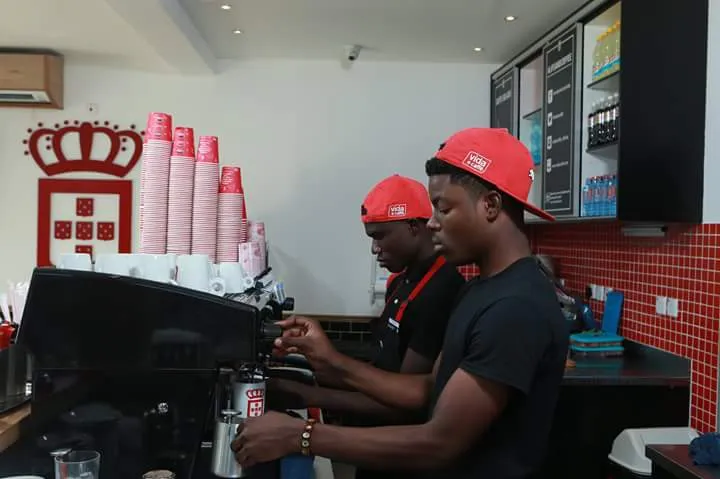
Photo: NanaKojo Young, CC BY-SA 4.0, via Wikimedia Commons
There's a particular kind of confidence that regular café-goers carry. They walk up to the counter without hesitating, rattle off something that sounds vaguely like a secret code, and within minutes they're settled into their favorite chair with exactly what they wanted. If you've ever stood behind someone like that feeling slightly bewildered, this one's for you.
The truth is, ordering at a coffee shop — especially an independent one like The Java Café — isn't complicated. It just has its own rhythm. And once you pick up on that rhythm, the whole experience changes.
Start With What You Actually Want
Before you even step up to the counter, do a quick gut-check. Are you after something warm and comforting, or cold and energizing? Do you want something sweet, or are you chasing a clean, roasty flavor? Do you need the caffeine hit, or is this more of a social sip?
Baristas aren't mind readers — though after a few visits, the good ones get pretty close — so starting with a general sense of what you're after gives them something to work with. Don't be afraid to say, "I usually like something sweet but not too heavy" or "I want something strong but smooth." That's genuinely useful information, and most baristas love a little puzzle to solve.
Skip the apology tour, too. You don't need to open with "Sorry, I don't really know coffee." You're a customer at a café. You belong here.
The Modification Game
Here's something a lot of first-timers don't realize: the menu on the wall is a starting point, not a ceiling. Almost everything listed can be adjusted, swapped, or built on — and baristas, for the most part, genuinely enjoy customizing drinks when the request makes sense.
A few modifications that tend to land well:
- Milk swaps: Oat, almond, soy, coconut — most independent cafés stock several options. Just ask. Oat milk, in particular, steams beautifully and has become a crowd favorite for lattes.
- Sweetness levels: If a drink sounds good but you're worried it'll be too sugary, ask for half the syrup. If you want something richer, ask for an extra pump. Easy.
- Espresso strength: A standard latte usually comes with one or two shots. Ask for a double if you need more kick, or a ristretto shot if you want something shorter and more intense.
- Temperature tweaks: Extra hot, less hot, room temp — these are all normal requests. "Barista temperature" is a thing some regulars ask for, which usually means slightly cooler than scalding so you can actually drink it right away.
What makes a modification go smoothly is keeping it reasonable and being friendly about it. Baristas are professionals, not order-takers, and treating them like the skilled craftspeople they are goes a long way.
The Off-Menu World
Almost every café has drinks that never made it onto the board — either because they're seasonal experiments, staff favorites, or just things that developed organically over time. These are the holy grail for anyone who wants to feel like a true insider.
The best way to find them? Just ask. Something like, "Is there anything you've been making lately that's not on the menu?" or "What's your personal favorite thing to drink here?" opens a door most baristas are happy to walk through. You might discover a brown sugar cold brew variation, a lavender honey latte that only shows up in spring, or a dirty chai that someone on staff perfected during a slow Tuesday afternoon.
At The Java Café, we've always believed the best drinks are the ones born from genuine enthusiasm — and those stories usually live behind the counter, not on the chalkboard.
Timing Is Everything
If you want a relaxed, unhurried interaction with your barista, don't show up at 8:15 on a Monday morning. That's rush hour. The espresso machine is going full tilt, the line is out the door, and this is not the moment to ask for a detailed explanation of the difference between a macchiato and a cortado.
Mid-morning on a weekday — say, 10 to 11 a.m. — is often the sweet spot. The morning crush has passed, the afternoon crowd hasn't arrived, and the baristas have a moment to breathe. That's when the real conversations happen. That's when you might hear about the new single-origin they just started pulling, or get a sample of something they're testing out.
Weekend afternoons can also be surprisingly calm at smaller spots. It's worth experimenting to find your café's natural rhythm.
Learn a Little Lingo
You don't need a coffee degree, but knowing a handful of terms helps you communicate faster and more precisely. Here are a few worth having in your back pocket:
- Single origin: Coffee sourced from one specific region or farm, often with distinct flavor notes.
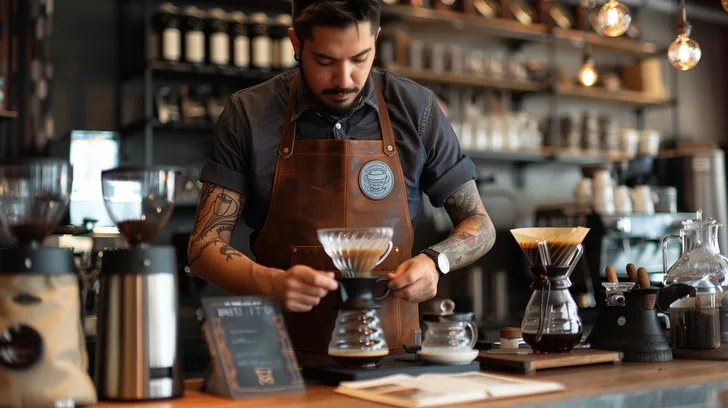
- Pour-over: A manual brewing method that produces a clean, nuanced cup — takes longer but worth it.
- Cortado: Equal parts espresso and steamed milk. Stronger than a latte, smaller than a cappuccino.
- Cold brew vs. iced coffee: Cold brew is steeped in cold water for hours; iced coffee is brewed hot and chilled. Different flavor profiles entirely.
- Dry vs. wet: For cappuccinos, dry means more foam, less milk. Wet means more milk, less foam.
You'll pick up more just by hanging around and listening. That's honestly one of the underrated pleasures of becoming a café regular.
The Regular Relationship
Here's the real secret: becoming a regular isn't about knowing the most. It's about showing up consistently, being genuinely kind, and taking a real interest in the place and the people who run it. Learn a barista's name. Ask how their day is going and actually listen to the answer. Try something new when they recommend it.
The "unwritten menu" isn't really about hidden drinks. It's about the relationship between a customer and a café — the kind that builds slowly over many visits until one day you walk in, they're already reaching for your cup, and the whole thing just feels like home.
That's what we're here for.