Every Dollar You Spend Here Does More Than Buy You Coffee

Let's be honest — most of us don't think too hard about what happens to our money after we tap our card at the counter. We order, we tip (hopefully), we find a seat, and we move on with our day. But if you've ever wondered why your neighborhood café charges what it charges, or why the owner looks slightly panicked every time the rent comes up in conversation, this one's for you.
The economics of an independent coffee shop are genuinely wild, and not in a fun way. They operate on some of the thinnest margins in the entire food-service industry. Understanding where your money goes doesn't just satisfy curiosity — it reframes the whole relationship between a café and the people who show up every morning.
The Price of the Cup Is Not the Price of the Coffee
Here's something that surprises a lot of people: the actual coffee in your latte — the beans, the shot, the milk — might account for somewhere between $1.50 and $2.50 of what you pay. The rest of that $6 or $7 goes somewhere else entirely.
Rent is usually the biggest beast. In most mid-sized American cities, a café occupying a decent corner spot can easily pay $4,000 to $10,000 a month in rent, sometimes significantly more in high-demand neighborhoods. That's before a single bag of beans gets ordered. Add in utilities, insurance, point-of-sale software subscriptions, equipment maintenance, and the occasional health inspection fee, and you're looking at overhead that would make most people's eyes water.
Then there are wages. A shop that pays its baristas fairly — which, increasingly, means above minimum wage with some kind of benefits — is making a deliberate choice that costs real money. When you choose to tip and to come back regularly, you're participating in that choice too.
Where the Local Part Actually Lives
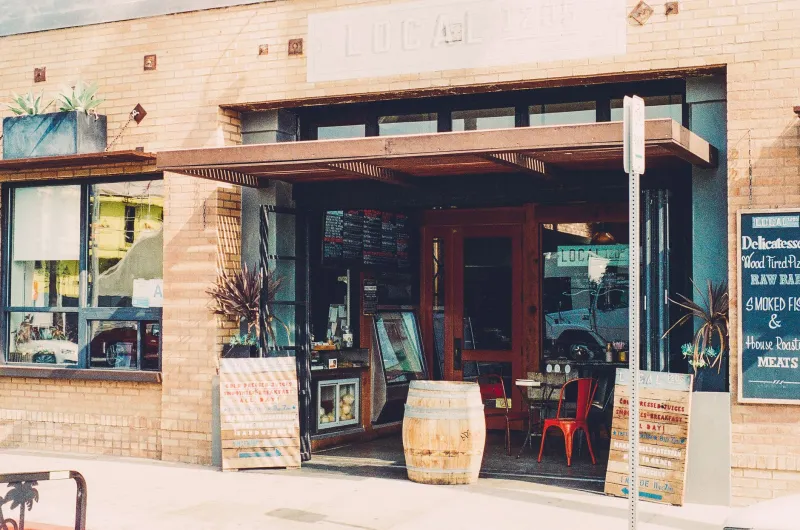
One of the clearest differences between an independent café and a national chain is where the supply chain ends up. Chains buy at scale from centralized distributors. Your neighborhood spot is far more likely to be sourcing from regional roasters, local dairy farms, and nearby bakeries.
That's not just a marketing angle — it has real economic consequences. When a café buys its beans from a roaster two towns over, that roaster can afford to keep its staff, invest in better equipment, and maybe even expand. When the café sources its pastries from a local baker who drops off fresh goods every morning, that baker has a reliable revenue stream. These relationships compound. The money doesn't leave the community; it circulates.
Some shop owners describe it as building a small ecosystem. You're not just buying coffee — you're buying into a network of people who are all trying to make something work in the same zip code.
Why Those "Premium" Prices Actually Make Sense
There's a persistent cultural discomfort in the US around paying more than a few dollars for coffee. It gets tied up in class anxiety, in nostalgia for the diner cup that cost 99 cents, in the sense that something is being put over on you. But that framing doesn't hold up when you look at what independent shops are actually trying to do.
A café that charges $7 for a specialty latte isn't necessarily padding its profit margin — it might be paying for ethically sourced beans, a living wage for its staff, and a space that's genuinely maintained and welcoming. The shop that charges $3.50 and somehow stays open is often cutting corners somewhere: on wages, on sourcing, on the quality of the experience itself.
This doesn't mean every expensive coffee is worth it, or that price is a perfect proxy for quality. But it does mean that when a local shop prices its drinks at a level that makes you wince slightly, there's usually a reason — and that reason usually involves keeping actual people paid and actual suppliers solvent.
The Reinvestment Nobody Talks About
Here's a piece of the puzzle that often gets overlooked: what independent café owners do with the money that's left over after expenses, on the rare occasions there is any.
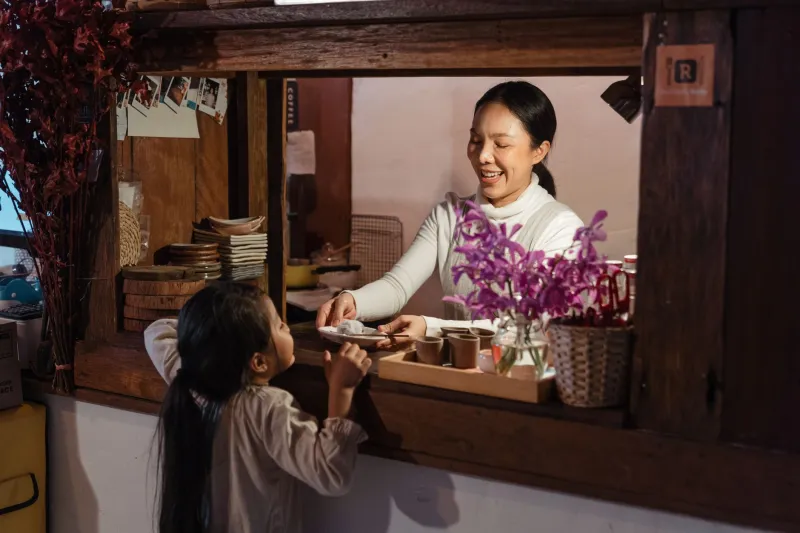
Chain profits funnel upward — to corporate headquarters, to shareholders, to executives in office buildings nowhere near your neighborhood. Independent shop owners, by contrast, tend to reinvest locally almost by default. They upgrade the seating. They sponsor the Little League team. They host the neighborhood association meeting and don't charge for the room. They hire from the surrounding community and sometimes mentor young people who've never held a food-service job before.
Some owners talk about the café as a form of community infrastructure — something closer to a library or a park than a pure retail transaction. That framing sounds idealistic until you realize how many people genuinely use their local coffee shop as a third place: not home, not work, but somewhere in between where they feel known and welcome.
What Loyalty Actually Does
The math of regular customers is something café owners think about constantly. A loyal regular who comes in four or five times a week and spends $7 to $10 each visit is contributing something like $1,500 to $2,500 a year to that business. Multiply that across even a few dozen regulars, and you start to see why those familiar faces matter so much — not just emotionally, but structurally.
Regulars also tend to do something else that's genuinely valuable: they bring other people in. They recommend the shop to visiting friends. They post about it. They defend it when someone online asks whether it's worth the price. That kind of word-of-mouth is something no advertising budget can fully replicate.
Choosing a local café over a chain — even occasionally, not even exclusively — has a measurable effect. It's not a revolutionary act, but it's not a trivial one either.
The Honest Bottom Line
Nobody is asking you to feel guilty about grabbing a chain coffee when it's convenient, or to treat every café visit as a political statement. That's exhausting, and it's not the point.
The point is simpler: the independent coffee shop on your corner is doing something harder and more complicated than it looks. It's managing a fragile set of economics while trying to be a decent place for people to gather, work, and feel at home. The money you spend there doesn't disappear into a corporate ledger — it pays someone's rent, keeps a local roaster's lights on, and helps a small business stay open long enough to become a fixture of the neighborhood.
Next time you order, you don't have to think about all of that. But it's nice to know it's true.