What's Playing Matters More Than You Think: The Secret Power of a Coffee Shop's Playlist
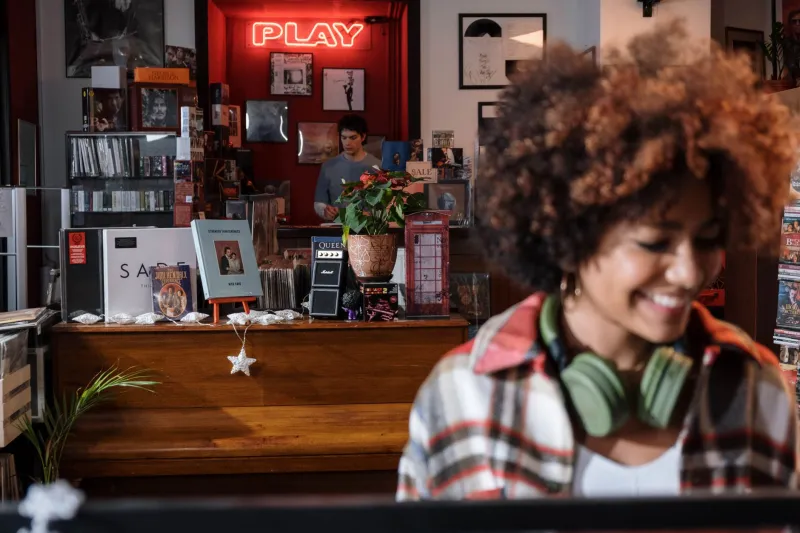
You probably noticed the coffee first. Maybe the smell hit you before the door even swung shut. But somewhere between ordering your latte and finding a seat, something else settled in—a song, barely audible over the grinder, that made the whole room feel like somewhere you actually wanted to be.
That wasn't luck. It was a decision.
In independent coffee shops across the country, the music playing overhead is one of the most deliberate choices an owner makes—right up there with sourcing beans and designing the menu board. It's also one of the least talked-about ingredients in what makes a neighborhood café feel like home.
More Than Background Noise
Ask any barista worth their salt and they'll tell you: the playlist is never just filler. It's atmosphere. It's identity. It's a signal to every person who walks through the door about what kind of place this is and who it's for.
"People think we just shuffle Spotify," says one barista at a small independent shop in Portland, Oregon. "But I'm thinking about energy levels, time of day, what kind of crowd we've got. It's more like DJing than people realize."
That instinct is backed up by a solid body of research. Studies on retail and hospitality environments consistently show that music tempo, volume, and genre all influence how long customers stay, how much they spend, and how they feel about the experience overall. A slower tempo encourages people to linger. Familiar songs create comfort. Unfamiliar ones can spark curiosity—or send someone straight back out the door.
For independent cafés trying to compete with the consistency of big chains, getting the soundtrack right isn't a luxury. It's strategy.
Genre as Identity
Walk into enough independent coffee shops and you start to notice patterns. Certain genres have become almost shorthand for certain kinds of spaces.
Lo-fi hip-hop has had a serious moment—and for good reason. Its steady, unhurried beats are practically engineered for focus, which is why it's become the unofficial soundtrack of the remote-work café crowd. If you see a row of open laptops and a chalkboard menu with oat milk options, there's a decent chance something lo-fi is floating through the speakers.
Indie folk tends to signal something warmer, more conversational. Think mismatched furniture, local art on the walls, the kind of place where people actually look up from their screens. The acoustic guitar and quiet vocals invite you to slow down without making you feel like you should be anywhere specific.
Jazz—especially the classic American kind—carries its own weight. It's sophisticated without being pretentious, familiar enough to feel comfortable, complex enough to reward attention. A lot of shops lean on it during morning hours when the energy is still gathering itself.
And then there are the shops that refuse to be categorized. The ones spinning soul records on a Wednesday afternoon, or playing Appalachian string music next to a pour-over bar. Those playlists are often the most revealing—because they're not chasing a trend. They're expressing a point of view.
The Psychology Behind the Queue
There's a concept in environmental psychology called "place identity"—the idea that physical spaces communicate values and attract people who share them. Music is one of the fastest ways a café can establish that identity before a single word is exchanged.
"When someone walks in and the music is something they recognize or love, they immediately feel like they belong here," explains a café owner in Austin, Texas, who has been curating her shop's playlists herself for over a decade. "And when someone walks in and the music is something they've never heard before but it still feels right, that's even better. That's discovery. That's when people start asking, 'what is this?' And that's how regulars are made."
That moment—the "what is this?" moment—is surprisingly common in shops that take their playlists seriously. It creates a point of connection not just between the customer and the café, but between customers themselves. Someone at the next table leans over. A conversation starts. A community, in its smallest possible form, briefly assembles around a shared song.
Volume, Time, and the Art of Reading a Room
It's not just about what's playing. It's about how it's playing.
Volume is a lever that experienced baristas learn to operate almost unconsciously. Early morning calls for something quiet—people are still waking up, conversations are private, the room is finding its rhythm. Midday, when the café is full and the ambient noise is already high, you can push the volume a little. Late afternoon, when the post-lunch lull settles in, something slower and softer can keep the energy from flatlining.
"I turn it up slightly when I can tell people are starting to get restless or the vibe is getting too quiet and weird," one barista in Chicago admits. "It's like adding a little heat to a room that's gone cold."
Weekends shift things further. The crowd is different—less transactional, more social. People aren't racing to get back to a desk. The playlist can afford to be more adventurous, more playful, maybe even a little louder.
The Regulars Always Notice
Here's something café owners will tell you quietly: the regulars always notice when the playlist is off. They might not say anything. But something in the visit feels slightly wrong, like a familiar room with the furniture moved two inches.
That sensitivity is actually a sign of something working. It means the music has become part of the experience, woven into what people expect and look forward to. It means the café has successfully used sound to build a sense of place.
Some shops have taken this a step further, creating playlists that rotate with the seasons, or building themed sets around local events and holidays. A few have even started sharing their playlists publicly—on Spotify or Apple Music—as a way to extend the café's identity beyond its four walls. You can carry the feeling home with you, at least for a few songs.
Your Neighborhood Cup, Your Community Sound
At the end of the day, a great café playlist does what all good hospitality does: it makes people feel seen. It says we thought about you before you got here. It says this place has a personality, and you're welcome in it.
The coffee is what gets you in the door. The music is part of what keeps you coming back—even if you can't quite put your finger on why.
Next time you're settled into your usual spot, take a second to actually listen to what's playing. Someone chose that song, at that volume, for this exact time of day. And somewhere in that choice, you'll find a little piece of what makes your local café feel like yours.