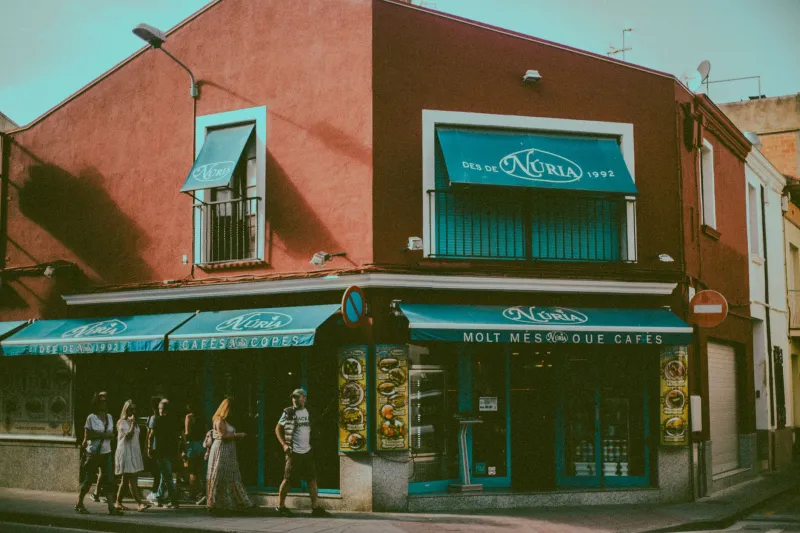
Five Dollars for a Latte, Ten for Belonging: Who Your Coffee Shop Is Really For
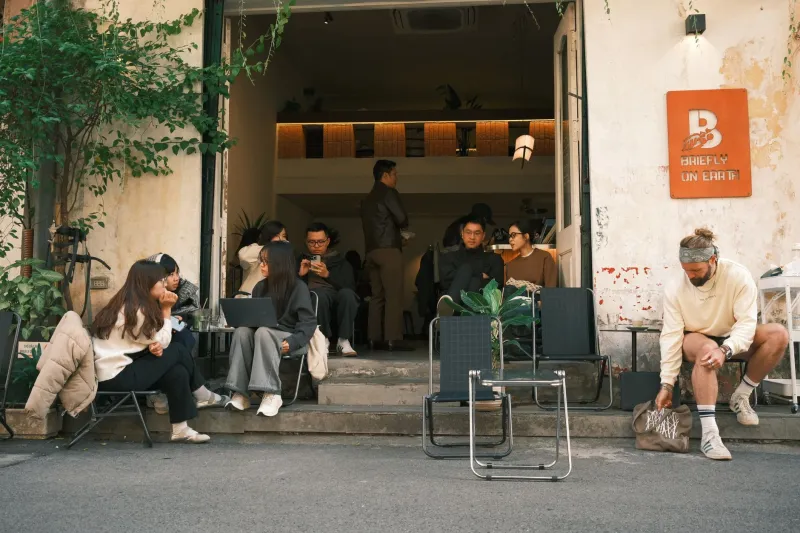
There's a version of the neighborhood coffee shop that exists mostly in our collective imagination: warm, unpretentious, the kind of place where a retired teacher and a twenty-four-year-old software contractor share a table without either one feeling out of place. Where the coffee is good, the prices are reasonable, and nobody makes you feel like you're doing it wrong.
That place exists. It's just not as common as we'd like to believe.
The uncomfortable truth about independent coffee shops — the ones we celebrate as community anchors, as alternatives to the corporate chains, as the soul of a neighborhood — is that they can be just as exclusionary as anything they're positioned against. Sometimes more so, because the exclusion comes wrapped in exposed brick and pour-over coffee and a curated playlist, which makes it harder to name.
The Price of Entry
Let's start with the obvious: coffee has gotten expensive.
A specialty latte at an independent café in most American cities now runs between $6 and $8. Add a pastry and you're at $12 before you've sat down. For someone working a retail job or living paycheck to paycheck in the same neighborhood where that café operates, that's not an occasional splurge — it's a genuine barrier.
"I walk past three coffee shops on my way to the bus stop," said Tamara, a home health aide in Chicago's Logan Square neighborhood. "I've been in one of them once. It was $7.50 for a medium coffee. I make that work in a day sometimes. I'm not going back."
Café owners are quick to point out that their prices reflect real costs: specialty-grade beans, living wages for staff, expensive commercial equipment, and rents that have risen alongside the gentrification their own presence may have helped accelerate. That's not a deflection — it's largely true. Running an independent café on thin margins in an expensive city is genuinely hard.
But acknowledging the economics doesn't dissolve the tension. It just makes it more complicated.
The Gentrification Loop
Here's the cycle that urban researchers have documented in neighborhoods from Portland to Pittsburgh: an independent coffee shop opens in an affordable, often historically Black or Latino neighborhood. It attracts a creative class clientele. The neighborhood gets written up as "up and coming." Rents rise. Longtime residents — the people who actually built the community that made the neighborhood interesting in the first place — get priced out. The café that helped trigger the cycle becomes a gathering place for the people who replaced them.
This isn't a hypothetical. It's a pattern with a documented history, and café owners who care about genuine community have to reckon with it honestly.
Some are trying. In neighborhoods across the country, independent coffee shops are experimenting with tiered pricing models, pay-it-forward programs, and community tabs that let customers subsidize a drink for someone who can't afford one. Others partner with local organizations to host free events, keeping the space accessible even when the menu prices aren't.
"We run what we call an 'open table' on Sunday mornings," said the owner of a small café in a historically working-class neighborhood in Pittsburgh. "No purchase required to sit. We put out a coffee urn and some day-old pastries. It's not charity — it's just trying to be honest about who we say we are versus who actually walks through our door."
Atmosphere as Gatekeeping
Price is the most legible barrier, but it's not the only one.
Atmosphere — the music, the aesthetic, the unspoken behavioral norms — can be just as effective at signaling who belongs and who doesn't, without a single word being exchanged.
A café that plays exclusively indie folk and displays locally made art at $400 a piece isn't doing anything overtly hostile. But it's communicating something about its intended audience. So is the café with no seating that faces the street, or the one where the staff's body language makes it clear they're expecting you to know the vocabulary before you order.
"There are coffee shops in my city where I know I'd feel out of place before I even looked at the menu," said DeShawn, a teacher in Atlanta. "It's not that anyone's rude. It's more like... the whole room is aimed at someone who isn't me. You feel it."
Contrast that with cafés that make deliberate choices in the other direction: staff trained to be genuinely welcoming to first-timers, menus that explain what things are without condescension, music that reflects the actual neighborhood, and seating arrangements that invite lingering rather than discouraging it.
Those choices aren't accidental. They're policy.
The Cafés Getting It Right
The coffee shops that seem to genuinely thread this needle share a few things in common.
First, they hire from the neighborhood — not just as a feel-good gesture, but because staff who live in the community understand its rhythms and its people in ways that outsiders don't.
Second, they treat the space as genuinely public. That means tolerating some level of loitering, being flexible about minimum purchases, and not treating someone nursing a drip coffee for two hours as a problem to be solved.
Third, they stay engaged with the community even when it's inconvenient — showing up to neighborhood meetings, responding when longtime residents raise concerns, and resisting the temptation to cater exclusively to the newer, higher-income arrivals who might be easier customers.
None of this is a complete answer to the gentrification question. A café can do all of these things and still, by existing and attracting foot traffic, contribute to the economic pressures that displace people. That's the hard part. There may not be a clean resolution.
A More Honest Conversation
What the best independent coffee shops seem to understand is that "community" isn't a vibe or a branding choice. It's a practice. It requires asking, regularly and honestly, who is actually welcome here — not in theory, not in the mission statement on the chalkboard by the door, but in practice, on a Wednesday afternoon, when someone walks in who doesn't fit the usual customer profile.
The neighborhood café at its best is one of the few truly public-feeling spaces left in American life. It's not a park, it's not a library, it has prices on the menu and a landlord to pay. But it can choose — consciously, deliberately — to act like it belongs to everyone who lives nearby.
That choice is harder than it sounds. It costs something. But so does the alternative: a beautiful, well-reviewed, award-winning coffee shop that the neighborhood it claims to anchor can't actually afford to enter.