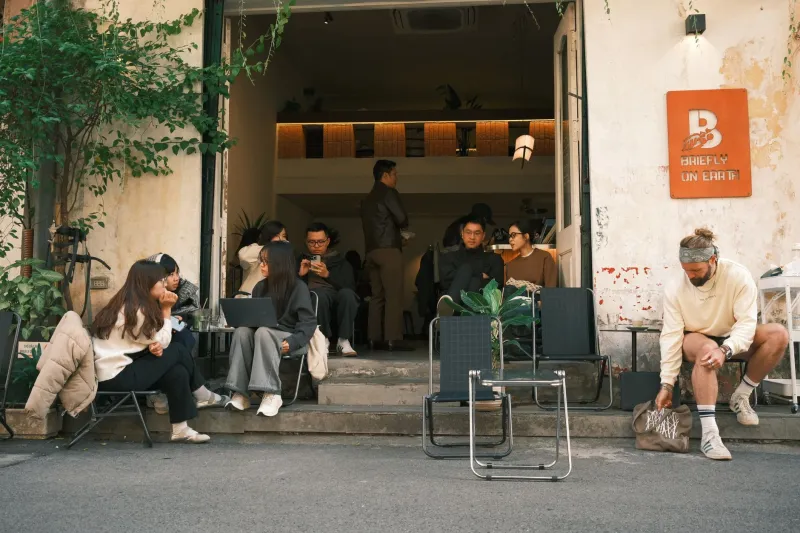
Move Here, They Said. There's a Great Café Around the Corner.
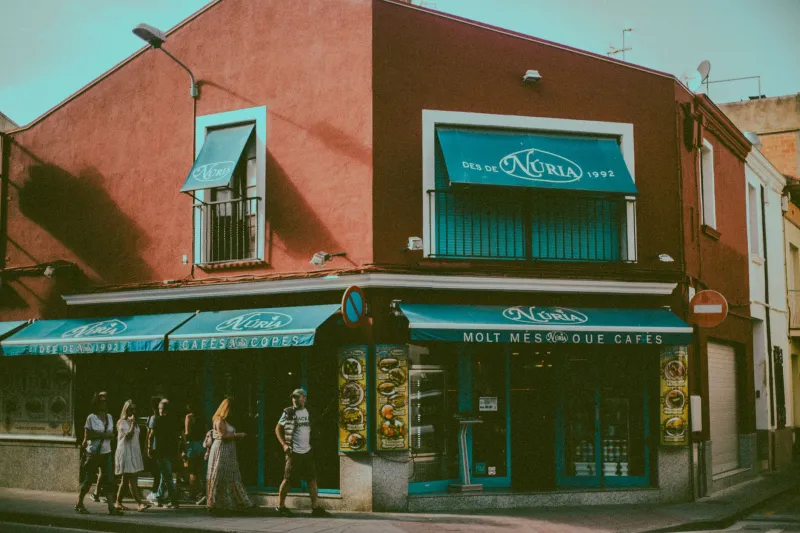
Ask someone why they moved to their neighborhood, and you'll hear the usual answers: good schools, reasonable rent, easy highway access. But spend enough time listening — really listening — and a different reason keeps sneaking in.
"Honestly? The coffee shop," admitted Marcus, a freelance UX designer who relocated from suburban Phoenix to a walkable stretch of Denver's Highlands neighborhood two years ago. "I know how that sounds. But I work from home five days a week. The closest thing I have to an office commute is the eight-minute walk to The Weathered Mug. That walk matters to me."
Marcus isn't alone. Across the country, a quiet but significant shift is happening in how people evaluate neighborhoods — and a great local café has become one of the most underrated factors in the equation.
The New Commute Nobody's Talking About
For decades, American real estate was shaped by one overriding concern: how long does it take to get to work? Proximity to highways, train stations, and downtown office cores drove property values, neighborhood development, and where people were willing to live.
Then the pandemic happened. Remote work exploded. And suddenly, millions of Americans were free — or at least freer — to ask a different question: What do I actually want to be close to?
For a surprising number of people, the answer included a café.
Urban planners have started paying attention. "We're seeing walkability scores being discussed differently now," said one city planner working on neighborhood revitalization projects in the Midwest. "It used to be walkability to transit. Now people are asking about walkability to amenities — and coffee shops consistently come up as anchor amenities that signal neighborhood health."
Walk Score and similar platforms have long tracked café density as part of their neighborhood ratings. But the weight people assign to that metric in their actual decisions has grown noticeably since 2020.
Third Place, First Priority
Sociologist Ray Oldenburg coined the term "third place" back in the 1980s — a space that's neither home nor work, where community life actually happens. Libraries, barbershops, parks, and yes, coffee shops all qualify.
What's changed is that for remote workers, the third place has become something closer to a second office. And unlike a corporate headquarters you're forced to commute to, people get to choose their third place. They choose it based on vibe, proximity, community, and the quality of the flat white.
"I looked at four apartments before I found this one," said Deja, a grant writer who works remotely for a nonprofit in Atlanta. "One of them was bigger and cheaper. But it was a twenty-minute drive from anywhere I'd actually want to sit and work. I pay a little more to be six blocks from my café. I consider it part of my quality of life budget."
Café owners are noticing this shift, too — sometimes with a mix of gratitude and mild alarm.
"We opened here because the rent was affordable and we believed in the neighborhood," said the owner of a independent coffee shop in a transitional neighborhood in Columbus, Ohio. "Now I have people telling me they moved to the street specifically because of us. That's humbling. It also means there's a lot riding on us staying open."
What Café Density Actually Signals
Real estate professionals have started incorporating café access into their neighborhood pitches — not as a gimmick, but because buyers and renters are asking about it directly.
And it's not just about coffee. A thriving independent café signals a cluster of other things that buyers care about: foot traffic that supports small businesses, a community that gathers in person, a neighborhood with enough economic stability to sustain a sit-down establishment. An independent café that's packed on a Tuesday morning is, in a weird way, a data point about neighborhood vitality.
The flip side, of course, is that café proximity can become a gentrification marker — a signal that rents are about to rise and longtime residents may be pushed out. That tension is real, and it deserves its own honest conversation (one we'll get to in a different piece). But the underlying dynamic — that people follow community anchors when they choose where to live — is undeniable.
The Eight-Minute Walk as Life Design
There's something worth sitting with here, beyond the real estate angles and the remote work statistics.
The idea that your daily café commute — that short walk or bike ride to your neighborhood spot — could be more meaningful than an hour on the interstate is actually a pretty radical reframe of how we think about our days.
For Marcus in Denver, that eight-minute walk to The Weathered Mug is when he mentally transitions from "home mode" to "work mode." It's his version of the commute ritual — the psychological handoff that used to happen on a train or in a car, now happening on a sidewalk with a reusable cup.
"I get there, I order, I sit down, and I'm at work," he said. "But I'm also in my neighborhood. I see the same people. My barista knows my order. It sounds small, but it's actually the thing that makes working from home feel sustainable."
Small is doing a lot of work in that sentence. The café down the street is small. The walk is small. The ritual is small. But stack enough of those small things together, and you get something that looks a lot like a life you actually want to be living.
Choosing Your Neighborhood Like You're Choosing Your Community
If you're in a position to choose where you live — and not everyone is, which matters — it might be worth asking yourself what you're actually optimizing for.
Commute time to an office you go to twice a week? Or proximity to a place where you know people's names, where you do your best thinking, where the coffee is good and the Wi-Fi works and someone always seems to be having an interesting conversation two tables over?
More Americans are choosing the second option. And the neighborhoods that have a great local café at their center — a place that's genuinely woven into the daily life of the people who live there — are the ones people are increasingly willing to pay a premium to be part of.
The corner café has always been more than a place to get coffee. Now it's also, for a lot of people, the reason they chose the corner in the first place.