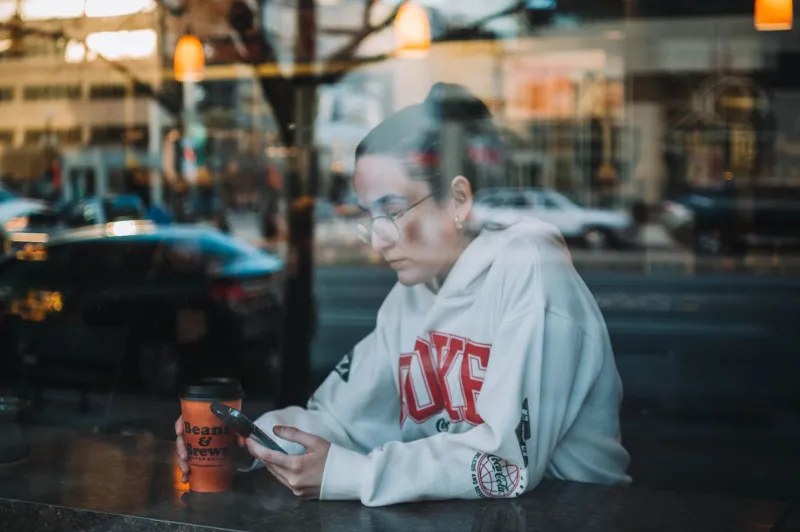
The Invisible Glue: What We Lose When the Corner Café Closes for Good

Picture a Tuesday morning. You're not at work yet, and you're not at home anymore. You're somewhere in between — somewhere that has good lighting, a familiar smell, and a person behind the counter who nods at you before you even open your mouth. That place has a name in the world of sociology, and it's not just "the café."
It's called a third place. And quietly, steadily, it's vanishing.
A Concept With a Name Most People Have Never Heard
Back in 1989, urban sociologist Ray Oldenburg introduced the idea in his book The Great Good Place. His argument was simple but kind of stunning when you sit with it: human beings need three distinct environments to function well. The first place is home. The second place is work. The third place is everything else — the neighborhood bar, the barbershop, the diner, the park bench where the same four retirees play chess every morning.
And, yes, the coffee shop.
Third places aren't defined by what they sell. They're defined by what they allow: informal gathering, low-stakes conversation, a sense of belonging that doesn't require you to produce anything or perform for anyone. You can sit there for an hour and leave having said twelve words to a stranger, and somehow feel less alone than you did when you walked in.
Oldenburg was worried about the erosion of these spaces even in 1989. He'd be beside himself today.
What's Actually at Stake
Across the country, independent coffee shops are closing at a pace that should make anyone who cares about neighborhoods genuinely uncomfortable. Rent increases, labor costs, supply chain pressures, and the relentless competition from drive-through chains have all taken their toll. Every time a locally owned café shuts its doors, the neighborhood loses a business. But it also loses something harder to replace.
It loses a place where the high school kid doing homework and the retired nurse and the freelance graphic designer and the new dad with the stroller all end up in the same room without having specifically planned to be there together.
That kind of accidental proximity is rarer than it sounds. Think about how little of your daily life puts you in contact with people outside your immediate social circle. Your commute is solo or digital. Your office, if you still have one, is full of colleagues. Your home is your home. The third place is the only environment designed — even if informally — for social mixing without an agenda.
When it disappears, we don't just lose a spot to grab a latte. We lose the connective tissue of the neighborhood itself.
What Regulars Actually Say About It
Ask anyone who has a "their place" — a café they've been going to for years — and they'll struggle to explain what it means to them. Not because it doesn't mean anything, but because the meaning is woven into small things that sound almost embarrassing when you say them out loud.
"The barista there knows I switched to oat milk after my doctor's appointment in March. I never had to explain it twice."
"I met my business partner at that place. We were both working alone at adjacent tables for three weeks before we said a word to each other. And then we did."
"After my divorce, I went there every single morning for a year. Not because the coffee was life-changing. Because it was the one part of my day that felt normal."
Those aren't testimonials about espresso quality. They're testimonials about being seen, being anchored, and being part of something that doesn't require a login or a membership fee.
The Mental Health Angle Nobody's Talking About Enough
Loneliness in America has reached what the U.S. Surgeon General officially called an epidemic. Rates of social isolation have climbed steadily for decades, and the pandemic accelerated trends that were already well underway. Remote work, social media substituting for in-person contact, the erosion of civic organizations — the usual suspects are all there.
But here's a quieter factor: the disappearance of low-pressure, no-obligation spaces where people can simply exist near each other.
You don't have to be an extrovert to benefit from a third place. In fact, the research on what's sometimes called "weak ties" — the casual acquaintances and familiar strangers in your life — suggests these loose social connections contribute significantly to wellbeing. The person who holds the door, the barista who remembers your order, the guy you see every Wednesday who you've never officially met but always exchange a nod with. These interactions are not trivial. They're part of what makes a community feel like a community.
A café is a machine for generating weak ties. And we are not building enough of them.
The Case for Treating Your Local Café Like Infrastructure
We spend a lot of time talking about infrastructure in this country — roads, bridges, broadband. These are important. But social infrastructure matters too, and it's almost entirely invisible in public conversation.
When a bridge deteriorates, people notice. When a neighborhood café closes, people feel sad for a week and then drive to the chain place two miles out. The loss is real, but it's diffuse. It doesn't show up in any budget line or policy report. It just shows up, slowly, in the texture of daily life getting a little thinner.
Supporting your local coffee shop — actually going, regularly, and spending money there — is not a sentimental act. It's a civic one. It's a vote for the kind of neighborhood where people still run into each other by accident. Where you can sit alone and not feel alone. Where the person making your drink knows your name and means it when they ask how you're doing.
Come Back to the Table
At The Java Café, we think about this stuff a lot. Not in a heavy-handed way — nobody wants a lecture with their cortado. But we notice what happens in here on any given morning. The conversations that start between strangers. The regulars who show up not because they couldn't make coffee at home, but because home isn't the point.
The third place isn't a luxury. It's not a lifestyle accessory or a backdrop for content creation. It's one of the oldest human needs dressed up in a modern form — a place to belong that isn't about obligation or productivity or performance.
We're glad you're here. And we mean that in the biggest sense possible.