By Design: The Quiet Decisions That Make You Want to Stay Longer at Your Favorite Café
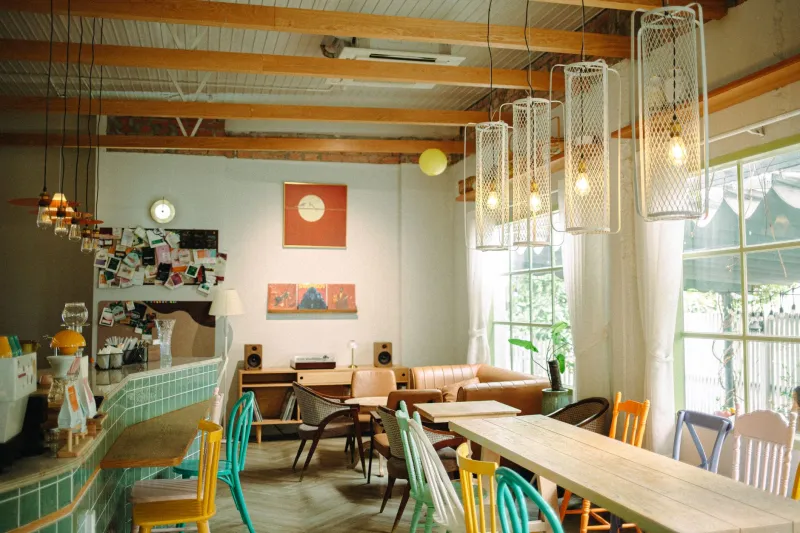
You walk into a coffee shop, grab a seat, and suddenly it's two hours later. Your cup went cold twenty minutes ago. You've had three separate low-stakes conversations with strangers. You don't especially want to leave.
You probably chalked it up to good vibes. Maybe the coffee was exceptional. Maybe you were just in a good mood.
But here's the thing: almost none of that was accidental.
The independent coffee shops that genuinely become community anchors—the ones that outlast trends, survive rent hikes, and earn the kind of loyalty that borders on devotion—are almost always the result of intensely deliberate design thinking. Every corner, every light fixture, every speaker placement is a decision. And those decisions, stacked together, are the difference between a place that feels alive and one that just sells coffee.
The Corner Is Sacred
Ask any café designer or owner where the premium real estate is, and they'll tell you the same thing: the corners.
Corner seating is psychologically coveted because it offers what researchers call a "prospect and refuge" dynamic—you can see the room (prospect) while feeling sheltered from it (refuge). Your back is protected. You have a view. You feel simultaneously part of the energy and slightly removed from it. That's a deeply human comfort, and the best café layouts build as many of these moments as possible.
This is why the long communal table in the center of a café isn't always the draw it looks like. It's visible and social, sure—but it's also exposed. The regulars, the ones who stay for hours, almost always migrate to walls, corners, and window ledges. Good designers know this and build accordingly, creating a variety of seating types rather than optimizing for maximum chair count.
Light Does More Work Than the Menu
Lighting is where a lot of chains get it catastrophically wrong, and where smart independents quietly win.
Overhead fluorescent lighting—the kind that makes everyone look slightly ill—sends a subconscious signal: this is a transactional space, not a human one. It's efficient. It's clinical. And it makes you want to finish your drink and move on.
Warm, layered lighting does the opposite. A mix of pendant lights, table lamps, and natural window light creates what designers call "pools" of illumination—intimate zones that make each seat feel like its own small world. You're not in a room of forty strangers. You're in your own little pocket of it.
Natural light is particularly powerful. Studies on human circadian rhythms consistently show that proximity to windows and daylight improves mood and encourages people to linger. Cafés that position seating along street-facing windows aren't just offering a view—they're extending your visit by fifteen minutes without you noticing.
The Volume Question
Music in a coffee shop is one of the most contested design decisions an owner makes, and it's more nuanced than most people realize.
Too loud, and conversation becomes effortful. Customers drink faster, feel slightly stressed, and leave. This is actually a documented phenomenon—a 2008 study found that louder environments correlate with faster eating and drinking, which is great for a fast-casual restaurant trying to turn tables, and terrible for a café trying to build community.
Too quiet, and the space becomes self-conscious. Every cough is a disruption. Solo visitors feel exposed. Conversations carry too far.
The sweet spot—and successful independent cafés find it almost by feel—is music that fills the room without demanding attention. It should be present enough to absorb the awkward silences between strangers, varied enough to avoid feeling like an algorithm, and just quiet enough that you can lean in for a real conversation when you want one.
Genre matters, too. Not in a pretentious way—more in a pace-setting way. Slower tempos encourage slower drinking. Familiar songs create a sense of ease. The best café playlists feel curated by a person with taste, not generated by a mood board.
Furniture as Philosophy
Here's something chain coffee shops almost never do: mix their furniture.
Uniform seating—rows of identical chairs at identical tables—is efficient and scalable. It's also subtly dehumanizing. It signals that every customer is interchangeable, that the space was designed for throughput rather than people.
Independent cafés that become genuine gathering places tend to have a beautiful, slightly chaotic mix: a few wooden café chairs here, an upholstered armchair there, a long bench along one wall, a couple of bar stools at a high counter. The result looks eclectic, even a little haphazard. But it's actually solving a real problem: different people want different things from a café visit, and different seating types serve different needs.
The solo worker with a laptop needs a flat surface and an outlet. The two friends catching up need a small table where they can lean toward each other. The person who just wants to read needs something soft and slightly removed. A single seating type can't hold all of that. A thoughtfully mixed room can.
The Smell You Don't Notice Until You Leave
This one rarely makes it into the design conversation, but it should: scent is one of the most powerful atmospheric tools a café has, and the good ones manage it carefully.
Freshly ground coffee has one of the most positive scent associations in American culture—it's home, it's morning, it's comfort. Cafés that grind in-house and keep the grinders near the entrance are essentially pumping a welcome signal into the air. You don't consciously register it, but your brain does.
What kills it? Overwhelming cleaning products, food that competes with the coffee smell, or ventilation systems that flush everything out too aggressively. The goal is a room that smells like a place you want to be in—effortlessly, naturally, without anyone pointing it out.
Why It All Matters
None of these details exist in isolation. They work together, layering up into something that's genuinely hard to articulate but immediately felt the moment you walk through the door. It's the difference between a room that says hurry up and a room that says stay a while.
The cafés that become true community spaces—the ones that show up in people's memories, that get mentioned in wedding toasts, that people mourn when they close—are almost always the ones where someone thought hard about all of this. Where the owner sweated the lighting and the chair height and the playlist tempo, not because they read a design manual, but because they genuinely wanted to build a room where people could be human together.
That's not a small thing. In a world increasingly optimized for speed, a room designed for lingering might be one of the most radical acts of community care there is.